 Flashroom
History
Why is a daguerreotype a unique image rather than a print from a negative?
The daguerreotype formed a direct positive on a silver-coated copper plate, making each plate a distinct object.
The Library of Congress describes the daguerreotype as a detailed image made on silver-plated copper without a negative. Announced in Paris in 1839, the process became a basis for early portrait studios and produced a reflective surface whose appearance shifts with viewing angle.
Early exposures could take minutes, requiring sitters to remain still
Early exposures could take minutes, requiring sitters to remain still. Improvements to sensitization and lenses shortened exposure times, but a daguerreotype remained a unique plate rather than a source for ordinary multiple prints.
Evidence: Museum research
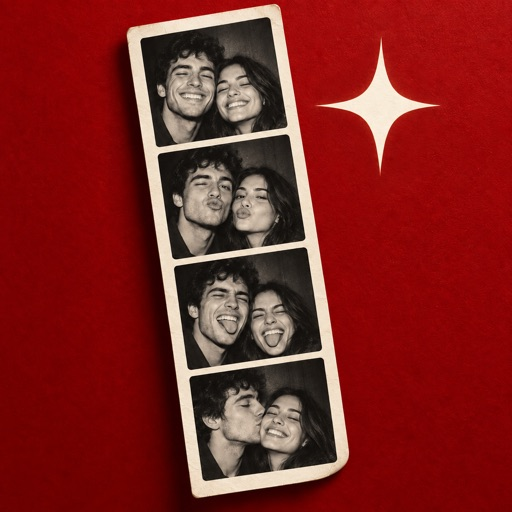
A photobooth strip belongs to a later culture of small repeatable
A photobooth strip belongs to a later culture of small repeatable outputs. A negative supports copies of one exposure; a strip groups several frames from one session.
Evidence: Museum research · Museum timeline
“old photograph” can refer to different physical objects
These distinctions help when cataloguing family pictures: “old photograph” can refer to different physical objects, with different evidence and care needs. Because the image is unique, a daguerreotype has no camera negative from which identical copies can be printed. Its reflective surface also changes with viewing angle, so digitized reproductions cannot fully convey the object. For family collections, the case or mat may preserve important clues about handling and presentation alongside the image itself.
Sources & further reading
Sources for the specific facts and product descriptions above. Our worked examples, interpretations and practical suggestions are original editorial guidance.
- Library of Congress — The daguerreotype mediumMuseum research
- Library of Congress — Daguerreian era timelineMuseum timeline
- Wikipedia — DaguerreotypeEncyclopedia; discovery and cross-check only